
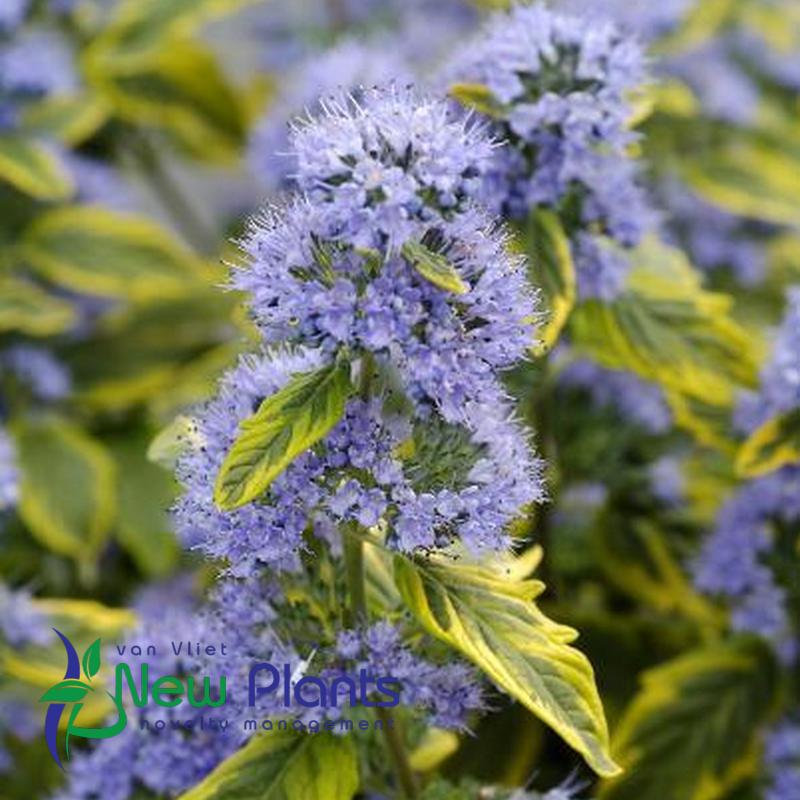
- One of the few species that blooms blue in the second half of summer.
- A short, spreading shrub, it reaches approximately 1 m in diameter.
- Grey-green leaves with a yellow margin. The bicolor foliage makes this variety decorative throughout the growing season.
- The blue inflorescences, appearing at the tips of current year’s shoots and in leaf axils, are fragrant and honey-producing. The flowers appear in September in tight clusters.
- A bright, sunny or slightly shaded, sheltered location is recommended. Light, well-drained, moderately moist soil with a pH close to neutral. It tolerates periodic drought.
- The plant is resistant to pests and diseases.
- The shrub is not very frost-hardy and requires winter protection. It should be cultivated like some perennials, carefully protecting the bases of the shoots and buds for the winter by building a mound of bark, leaves, sawdust, or compost around the base of the shrub. After winter, it’s beneficial to prune the shoots to encourage branching and flowering, which occurs on the current year’s shoots.


